Trees are Beautiful
David Lynch 1946 - 2025

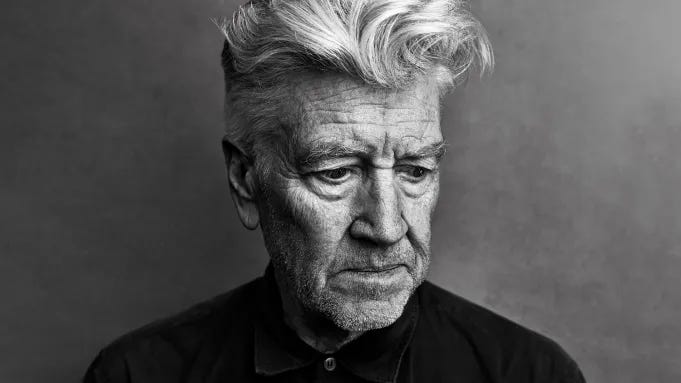
David Lynch passed away earlier this week, and it really hit hard. It wasn’t so much the shock or horror that a chain-smoking man in his late 70s might pass away, but more the sense that someone who had such a profound influence on me was gone. It felt as though a planet had vanished, or a mountain had crumbled. Something vast and all-encompassing had disappeared, and it was hard to process.
So, I’m going to process it now—but not in a "Top 10" list or anything like that. I’ll do it in a “Lynchian” way, as I understand it.
My first encounter with Lynch’s work was as a child, catching glimpses of Twin Peaks here in the UK. It had become what they call “watercooler television” in the US, and it was worlds apart from anything else on TV at the time. The beautifully haunting theme, unsurprisingly, was the first thing that captured me—equal parts unnerving and mesmerising. The snippets of the show I saw made little sense to me, shifting from what seemed like a detective drama to surreal dream sequences. I was too young to truly grasp what was happening, but I knew it was something special.
Fast forward many years, and as an adult, I found myself immersed in his work—his television, his films, and, to encompass it all, his art. I had steeped myself in his creations, obsessed over interviews, and gained a deeper understanding of what art could be. He reshaped my thoughts on the value of art, on its process, and on what it meant to create. His ideas about stillness and catching ideas like fish were profoundly ahead of their time, offering a gentle, meditative insight into a creative process that often yielded disturbing and enigmatic results.
But here’s the thing about his work: it is disturbing in places, incomprehensible in others, but also deeply funny, tender, and equal parts formulaic and groundbreaking. As a man who famously refused to elaborate on the meaning of his creations, this made complete sense. Lynch was one of the rare artists who put his work out there and said, “Think for yourself; see what you see.”
And that’s why he means so much to me. His work was honest. He presented it without pretense, offering you what was essentially a two-hour moving inkblot and letting you interpret it for yourself. It wasn’t about telling you what your interpretation said about you or correcting you with “what he intended.” It was about letting you think, feel, and engage with it on your own terms.
In an era where so much art feels committee-driven, where every nuance is overexplained and every possible interpretation clarified, the beauty of ambiguity—or even outright bafflement—is rare and precious. That’s why his work will endure forever. It invites you to reflect, to turn passive consumption into active engagement. And the best part? You’ll never get the answers.
Life is absurd. Life is disturbing. Life is funny, confusing, and offers no answers. Art is a reflection of life, and David Lynch captured that better than anyone.
He was honest. He was David Lynch. That’s why I’ll always love him.